If you have been getting regular manicures for years and everyone around you seems to have switched to gel, you are probably wondering what the fuss is about. Gel polish lasts longer, looks glossier, and dries instantly – but it also involves a UV lamp, a specific removal process, and a few things worth understanding before you sit down in the chair for the first time. Going in informed means you get better results, make smarter choices about your nail health, and actually enjoy the experience rather than wondering what is happening to your hands.
At Midlton Nails Studio in Rego Park, Queens, we see first-time gel clients regularly – and the questions they come in with are always the same. This guide answers all of them, clearly and honestly, so that your first gel manicure appointment feels like exactly what it should be: a straightforward upgrade to your nail routine.
What Gel Polish Actually Is and How It Differs from Regular Polish
The Chemistry Behind the Cure
Regular nail polish dries through evaporation – the solvents in the formula evaporate into the air, leaving a hardened layer behind. Gel polish works differently. It contains photoinitiators, compounds that react when exposed to UV or LED light and trigger a process called polymerization. During polymerization, the molecules in the gel formula bond together and harden into a solid, durable layer that is chemically cured rather than air-dried.
This distinction matters because it is what gives gel its durability. A cured gel formula is fundamentally more resistant to chipping, peeling, and smudging than a conventionally dried polish. The American Academy of Dermatology notes that while gel manicures offer notable durability advantages, proper application and removal practices are essential to preserving nail health over time.
The Key Differences from Regular Polish
The practical differences between gel and regular polish are significant enough that the two require separate skill sets and different product lines. Gel polish is applied in thin, precise layers – each layer cured under the lamp before the next is added – whereas regular polish can be applied in slightly more generous coats and simply left to air dry. Gel feels slightly thicker and more structured on the nail once finished, while regular polish remains more flexible.
The finish is also visually distinct. Gel produces a high-gloss, almost wet appearance that holds throughout the wear period, whereas regular polish can develop a dull or slightly opaque quality within days of application. For clients who want their nails to look freshly done two weeks after the appointment, gel is the clear choice. Allure consistently ranks gel manicures among the most requested professional nail services precisely because of how well the finish holds over time.
The Different Types of Gel You Might Encounter
Not all gel products are the same, and understanding the categories helps you have a more informed conversation with your technician. Soft gel, which is what most nail salons use for standard gel manicures, is applied over the natural nail and removed with acetone-based soak-off solution. Hard gel is a denser formula used for nail extensions and enhancements – it requires filing off rather than soaking. Builder gel, sometimes called BIAB, is a thicker soak-off formula used to strengthen the natural nail while providing a gel finish.
For a first-time gel appointment, soft gel is almost certainly what you will be getting unless you have specifically asked for extensions. It is the most widely used formula, the most forgiving on the natural nail when removed correctly, and the most accessible in terms of color and finish options.
What Happens at Your First Gel Manicure Appointment
Prep Work – Why It Matters More Than You Think
The most important part of any gel manicure is the preparation, and it is the step that separates a manicure that lasts two to three weeks from one that starts lifting after five days. Proper prep involves shaping and filing the natural nail, gently pushing back or removing the cuticle area, lightly buffing the surface of the nail to remove shine and create adhesion, and thoroughly dehydrating the nail plate before any product is applied.
Dehydration is critical because natural oils on the nail surface prevent gel from bonding properly. Your technician will apply a dehydrator – sometimes called a nail prep or cleanse – and then a primer or base coat specifically formulated for gel. Skipping or rushing these steps is the most common reason gel lifts prematurely, regardless of the quality of the polish itself.
NAILS Magazine has noted that technician prep technique accounts for more variation in gel longevity than the gel formula itself – which is why choosing a skilled professional matters as much as choosing a quality product.
The Application and Curing Process
Once your nails are prepped, your technician will apply a gel base coat and cure it under the LED or UV lamp – typically for 30 to 60 seconds per hand, depending on the lamp. Two thin coats of gel color follow, each cured individually. A gel top coat is then applied and cured to seal everything and deliver the final finish.
The entire application process takes longer than a regular manicure – roughly 45 to 60 minutes for a standard gel color service – but there is no drying time afterward. Your nails are completely set the moment the final cure is complete, which means you can leave the salon, handle your belongings, and go about your day without any risk of smudging.
The lamp itself is a common source of questions for first-time clients. LED lamps, which are now standard in most professional salons, cure gel significantly faster than older UV lamps and emit lower levels of UV radiation per session. The FDA classifies nail lamps as low-risk devices, and dermatology researchers generally consider the UV exposure from a standard gel manicure session to be minimal compared to other everyday UV sources. If you are concerned, applying a broad-spectrum SPF to your hands before the appointment is a simple precaution.
What the Finished Result Looks and Feels Like
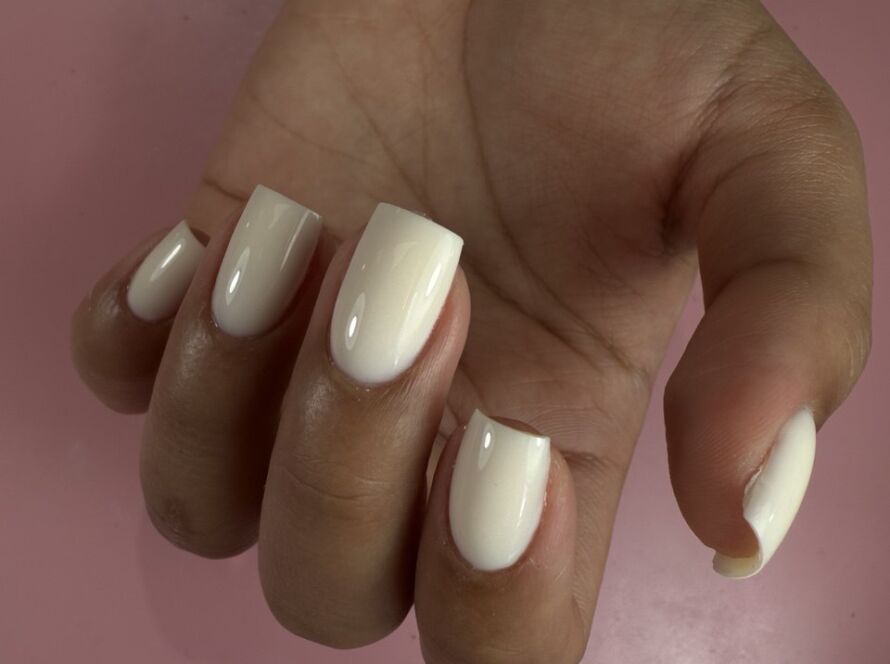
When your first gel manicure is complete, your nails will feel slightly different from what you are used to with regular polish. The surface is harder and more solid – you will notice a slight resistance if you tap your nails together that regular polish does not produce. The color appears deeper and more saturated, and the gloss level is considerably higher than anything you can achieve with air-dried polish.
Your nails may feel slightly tight or firm for the first day, particularly if you have very flexible natural nails. This is normal and settles quickly. If you experience any burning or heat sensation during the curing process, let your technician know immediately – a heat spike during curing is usually a sign that a layer is too thick and can be prevented by thinner application.
Ready to experience your first gel manicure? Book your appointment at Midlton Nails Studio and let our Queens technicians walk you through every step.
How Long Gel Polish Lasts and What Affects the Wear
The Realistic Timeline
Under good conditions, a professionally applied gel manicure lasts between two and three weeks on most clients. Some clients consistently get three weeks of clean wear, while others find two weeks is closer to their personal ceiling. Individual factors including nail growth rate, natural nail flexibility, and lifestyle all play a role in where you land on that spectrum.
The first sign that a gel manicure is reaching the end of its wear period is usually visible regrowth at the base of the nail rather than chipping or peeling. Because gel is durable and adheres well when applied correctly, the finish itself often remains intact while the gap between the gel and the cuticle becomes increasingly visible. Most clients book a fill or a new gel manicure every two to three weeks to stay ahead of that regrowth line.
Lifestyle Factors That Affect How Long Gel Lasts
Hands that are frequently submerged in water tend to see slightly shorter gel wear, because repeated wet-dry cycles can stress the bond between the gel and the nail plate over time. Clients who wash dishes without gloves, swim regularly, or work with their hands in wet environments often find that their gel starts lifting at the edges earlier than clients with drier hand routines.
Chemical exposure is another factor worth noting. Harsh cleaning products, acetone-containing hand sanitizers, and industrial solvents can degrade gel polish or compromise the seal at the edges. Byrdie recommends wearing gloves for cleaning tasks and applying a cuticle oil daily – both practices extend wear and protect the nail seal. Cuticle oil applied to the skin around the nail, not directly to the gel surface, keeps the surrounding tissue hydrated and reduces the chance of edge lifting from dry, contracting skin.
Signs Your Gel Manicure Is Ready for a Refresh
Lifting at the edges or base of the nail is the clearest signal that it is time to book a removal and fresh application. Resist the temptation to peel or pick at lifted gel – pulling gel off the nail takes layers of the nail plate with it and leads to the thinning and surface damage that gives gel manicures a bad reputation in some circles. If a corner lifts between appointments, filing it down gently to prevent snagging is fine, but a full peel is never the right answer.
Color fading, surface scratching, or visible tip wear are also signs that a manicure has run its course. At the two-week mark, take a clear look at your nails under good lighting – if the finish looks worn or the regrowth gap is becoming prominent, you are in the right window for a refresh.
Gel Removal and Nail Health
Why Proper Removal Is Non-Negotiable
The single most important thing to understand about gel manicures is that improper removal is the primary cause of nail damage associated with gel – not the gel product itself. When gel is removed by soaking the nail in acetone for the appropriate amount of time and then gently sliding off the softened product with a cuticle pusher, the natural nail underneath is left intact. When gel is peeled, ripped, or filed off aggressively, layers of the nail plate come with it.
The American Academy of Dermatology recommends professional removal for gel manicures rather than DIY methods, particularly for clients who are new to gel or who are not confident in the soaking technique. The acetone soak needs enough time to fully break down the gel bond – typically 10 to 15 minutes – and forcing the removal before that process is complete is where the damage happens.
In-Salon vs At-Home Removal
Professional removal in a salon uses acetone-soaked cotton placed over the nail and wrapped in foil or a specialized removal clip to concentrate the product and speed the soak time. A trained technician knows when the gel has lifted sufficiently and can remove it without any pressure that would stress the nail surface. They also apply cuticle oil and a light buffing treatment after removal to restore the nail surface before any next steps.
At-home removal kits are available and can be effective when used correctly, but the margin for error is higher. If you choose to remove gel at home, use pure acetone rather than acetone-containing nail polish remover, which is too diluted to fully break down gel in a reasonable time. The EWG Skin Deep database categorizes acetone as a low-concern ingredient when used appropriately, which is reassuring for clients who worry about chemical exposure during removal.
Giving Your Nails a Break Between Gel Applications
Whether you need to take breaks from gel manicures is a question with a nuanced answer. Healthy nails with no signs of thinning, sensitivity, or surface damage do not require mandatory rest periods between gel applications. However, if you notice that your nails have become noticeably thinner, more flexible than usual, or prone to peeling at the surface, a few weeks without product – using a strengthening treatment or nail conditioner during the break – will allow the nail plate to recover.
Nail strengtheners containing ingredients like biotin, keratin, or hydrolyzed protein can support nail plate integrity during both gel wear and rest periods. Staying well hydrated and maintaining a balanced diet also supports nail health from within – industry data suggests that nutritional deficiencies are a significant but often overlooked factor in nail fragility.
At Midlton Nails Studio, we assess your nail health at every visit and will always recommend the approach that supports your nails long-term rather than just filling your next appointment slot. If your nails need a break, we will tell you honestly – and we will make sure the transition period is as beneficial as possible.
Your First Gel Manicure: What to Expect Summary
Walking into your first gel appointment does not need to feel uncertain. You now know that the prep is the foundation of a long-lasting result, that the curing process is quick and low-risk, and that wear time depends on both the application quality and your personal habits between appointments. You also know that removal done correctly causes no damage – and that choosing a skilled, attentive technician is the single most impactful decision you can make for both the quality of your results and the health of your nails.
Midlton Nails Studio in Rego Park, Queens, has been providing professional gel manicures with a focus on both finish and nail health for years. Our technicians take prep seriously, use professional-grade products, and are always available to answer questions before, during, and after your appointment. If you are ready to make the switch to gel — or simply want to see what the difference feels like — we are ready to show you.
Book your first gel manicure at Midlton Nails Studio and see what two to three weeks of flawless nails actually looks like.
FAQ
Is gel polish bad for your nails?
Gel polish itself is not inherently damaging to nails. The damage that is sometimes associated with gel manicures almost always comes from improper removal – specifically, peeling or picking gel off the nail before it has fully lifted from the acetone soak. When applied and removed correctly by a trained technician, gel polish is a safe and effective nail service that most clients can wear long-term without any negative effect on nail health. If you notice thinning or sensitivity, discuss it with your technician, who can adjust the approach or recommend a short rest period.
How long does a gel manicure last compared to regular polish?
A professionally applied gel manicure typically lasts two to three weeks, compared to five to seven days for regular polish on most clients. The significant difference in wear time comes from the curing process – gel is chemically hardened under UV or LED light rather than air-dried, which makes the finish far more resistant to chipping and peeling. Lifestyle factors including water exposure, chemical contact, and nail growth rate all affect individual wear time within that range.
Does a gel manicure appointment take longer than a regular one?
Yes, a gel manicure takes slightly longer than a regular polish service – typically 45 to 60 minutes compared to 30 to 45 minutes for a standard manicure. The additional time comes from the curing steps between each layer of gel. However, because gel does not require drying time after the appointment, you leave the salon with fully hardened nails and can immediately go about your day. If you are considering your first gel appointment at Midlton Nails Studio, plan for about an hour and you will not feel rushed.
Can I do gel manicures if my nails are weak or thin?
Clients with weak or thin nails can often benefit from gel manicures because the gel layer adds structure and protects the nail from breaking during the wear period. Builder gel formulas, specifically designed to strengthen the natural nail while providing a gel finish, are particularly well suited for clients whose nails are fragile or prone to breaking. That said, if your nails are damaged from previous product use, a brief recovery period with a nourishing treatment before returning to gel can help ensure the best possible foundation for your next service.
How often should I get my gel nails redone?
Most clients book a gel fill or new gel application every two to three weeks. The main driver of timing is nail growth rather than product wear – gel typically remains chip-free well beyond the two-week mark, but the visible regrowth at the base of the nail becomes more prominent and most clients prefer to refresh before that gap becomes distracting. If you are happy with your nails at two and a half weeks and your schedule allows, there is no reason to book earlier. Discuss your preferred schedule with your technician at Midlton Nails Studio and they can help you plan a maintenance rhythm that works for your lifestyle.